

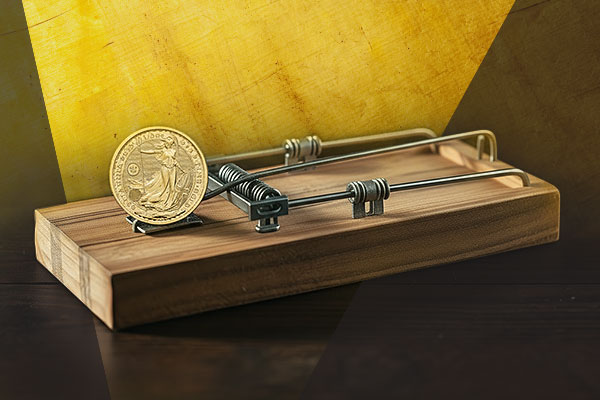
If it sounds too good to be true, it probably is. This timeless advice is essential for any investor, but it carries particular weight in today’s precious metals market. In 2025, gold prices have surged to record highs, with spot prices topping $4,300 per ounce at times, driven by a potent mix of geopolitical instability, central bank diversification, and persistent inflation concerns. This heightened demand creates a fertile ground for fraud. Scammers are evolving, moving beyond simple tricks to deploy sophisticated, AI-driven schemes designed to defraud investors seeking a valuable safe-haven asset.
The New Face of Fraud: AI and Social Media Scams
While buying gold outside of a reputable channel has always been risky, the nature of that risk has changed dramatically. Today’s scams are not just about counterfeit physical items; they involve elaborate digital deception.
Between 2024 and 2025, authorities have warned of a significant rise in scams using AI-generated identities and deepfake videos. In one notable case, South Africa’s financial regulator issued a warning against entities that used deepfake videos of a prominent businessman to endorse fraudulent schemes promising returns as high as 46%.
Elsewhere, syndicates in Asia have been dismantled for running “pig butchering” scams, where fraudsters use AI face-swapping to build fake romantic relationships over time before persuading victims to invest in fraudulent platforms, leading to losses in the tens of millions of dollars. These schemes are a stark reminder that online profiles and even video calls can no longer be taken at face value.
From Bite Tests to Blockchain: Verifying Physical Gold
The romantic notion of a pirate biting a gold coin to test its authenticity has a basis in fact—pure gold is a soft metal. However, this is a completely unreliable and inadvisable method of verification. Softer metals like lead can be plated to look like gold and would also show teeth marks. Furthermore, damaging a genuine precious metal coin or bar will negatively affect its value.
For centuries, hallmarks have served as a form of consumer protection, marking an item’s purity, maker, and origin. While still crucial, especially for jewellery, the investment-grade bullion market now employs far more advanced security measures to combat sophisticated counterfeiting.
Modern refiners and mints are embedding complex security features directly into their products. The Royal Mint, for example, has introduced Britannia bullion bars with features like latent imagery and micro-detailing that are extremely difficult to replicate. Other technologies accredited by the London Bullion Market Association (LBMA) include invisible anti-counterfeit markers that can be verified with a smartphone app and molecular-marking technology that creates a fully traceable supply chain from the mine onwards.
The private sale risk
Not every private seller online is a fraud. There are instances of people legitimately looking to sell their assets privately. However, choosing to buy from an individual or an online organisation with no established provenance is exceptionally risky. Without the protections and verification processes offered by a reputable dealer, the buyer bears all the risk of falling victim to a counterfeit or non-existent product.
Investment-grade gold
Investment-grade gold coins and bars are not mixed with alloys for durability and are required to be of at least 99% purity. Their value lies almost entirely in their precious metal content. The global standard for quality is set by the London Bullion Market Association (LBMA), which manages a ‘Good Delivery’ list of refiners that meet its exacting criteria.
As of late 2025, this exclusive list comprises 66 gold refiners worldwide. To gain accreditation, a refiner must demonstrate a minimum annual production of 10 tonnes of gold and a tangible net worth of at least £15 million, among other stringent requirements. To further enhance security and transparency, the LBMA launched its Gold Bar Integrity (GBI) Database in 2025, using technology to secure data on a bar’s origin and responsible sourcing. Good Delivery bars are stamped with a unique serial number, the refiner’s mark, the weight, and the purity. Gold coins, while not having serial numbers, are identified by their own distinct mint marks, denomination, weight, and type.
Gold Coins: knowing their worth
There is a thriving numismatic industry of collectors of rare and valuable coins, with some pieces selling for far more than their intrinsic gold value. Scammers or unscrupulous sellers can exploit this market to persuade people to overpay for their gold (read our article on the dangers of graded gold coins). The shocking truth is that such activity isn’t always illegal.
Discover Gold’s Unique Tax Advantage
Most investments are subject to some form of taxation, but physical gold can be totally free of VAT and capital gains tax.
Vanishing gold
Buyers should be wary of anyone selling gold that cannot or will not be delivered. Such scams take on a variety of forms. A classic example is the mining company scam, where investors are offered the chance to buy gold that is yet to be extracted at a price well below market value. Years later, the ‘investment’ has not materialised, and the scammers and your money are long gone. You may also be told that coins are being held in escrow when, in fact, they don’t exist. This tactic is often the final step in sophisticated AI-driven scams, where trust has been carefully cultivated before the request for funds is made.
Legitimate trust signals
Of course, many experienced investors choose not to take personal delivery of their gold. When purchasing through a reputable dealer, it is common practice to have the bullion or coins transferred directly from sale into secure, insured storage.
The key is to ensure the company selling the gold has an impeccable reputation. Look for evidence on trusted, independent online review platforms like Trustpilot. For UK investors, price comparison sites like BullionCompare and CoinCompare can also provide valuable dealer information. Membership of relevant associations, such as the British Numismatic Association or the British Chamber of Commerce, provides another layer of assurance.
Buy Back Guarantee confidence
Companies that are confident in the quality and authenticity of their products will offer a buy-back guarantee. This not only reassures buyers that they can liquidate their investment when they choose to, but it also proves the seller has absolute confidence in the value and integrity of the gold they sell.
Consultative approach
Buying gold can seem daunting. While companies cannot give financial advice, choosing a dealer with a consultative approach can help immensely. A good consultant will help you build your understanding of the market, the products available, and the tax treatment of gold and silver, allowing you to make a fully informed choice. Our 2025 Investor Guide is a resource designed to provide this clarity. When this guidance is paired with an all-important buy-back guarantee, it reflects a company’s trust in its products and its commitment to its clients.
The current market, with its record-high prices, offers significant opportunities but also attracts new and sophisticated threats. Taking the time to understand what you are buying, who you are buying from, and how to verify your assets will go a long way to avoiding gold scams. If an offer seems too good to be true, don’t bite.